|
PLUMBING IN A WASHING MACHINE OR DISHWASHER |
Home | A-Z contents | D.I.Y Forum | Safety First | Disclaimer
|
|
|||
|
Plumbing
in a washing machine, although time
consuming is not difficult! With the
use of push fit fittings this task is
well within the capabilities of a
Novice.
Firstly locate the best position
for the washing machine or dishwasher, on an outside wall near the sink
is Ideal as all pipes will be in close proximity, you normally need a
hot and cold supply for a Washing machine and
a cold only supply for a dishwasher.
A electrical socket is also
needed nearby for the appliance to be
connected to the Mains supply.
Dishwashers
fill with cold water only and then
heat the water after first washing
the plates, this is because of EGG
Yolk. If the dishwasher heated the
water first it would bake the EGG
Yolk onto the Plates and cutlery and
make it very difficult to remove.
You
need to decide which method you are
going to use to plumb in your washing
machine or dishwasher, please see
below-
|
SELF CUTTING TAP
|
PUSH FIT
|
COMPRESSION
|
Method
1
The
easiest way to plumb in your
appliance is to pick up some off the
shelf self cutting fittings, these
are much more expensive than normal
plumbing fittings but if you don't
have the correct tools in the first
place it could be more economical to
to pay for the self cutting type
rather than buying all the necessary
tools to complete the job as detailed
in Method 2.
The
disadvantages of the self cutting
taps and self cutting waste pipe
fittings are the cost of the fittings
and the need for the appliance to be
connected to be very close to the
existing pipe work as you are
restricted due to the length of the
flexible washing machine connector
hose. Self cutting taps are only
suitable for copper pipe!
Advantages
are their pure simplicity, speed of
fitting and the fact that you do not
need to drain down the system.
Fitting
self cutting taps is very easy,
manufactures individual instructions
should accompany the fittings when
you purchase them. In Most cases it
is simply a matter of opening the
back plate of the tap as it is
hinged, it then clamps around the
pipe, normally there is then a screw
to insert and finally the tap body
screws into the back plate which cuts
an hole in to the pipe, it is then
simply a matter of screwing the
appliance hose onto the tap tightly!
Self
cutting waste pipe connectors are
similar to fit, they have a body
which is clamped to the existing
waste pipe, then a screw cutter is
inserted into the fitting and turned
until a complete hole is cut in the
plastic pipe, try and remove the
plastic circular piece which you have
just cut out as this can cause
blockages. After removing the cutter
it is simply a matter of screwing the
piece into the clamp which accepts
the washing machine waste hose, this
then needs fastening with a jubilee
clip!
Please click here for detailed instructions on how to fit a self cutting tap
Method
2
Firstly
choose which fittings you are going
to use- compression or push fit.
Push
fit fittings are by far the easiest
type of connection, it's simply a
matter of cutting the existing pipe
and pushing the pipes into the
fitting, compression fittings can be
difficult to tighten in confined
places but are slightly cheaper.
The
water needs isolating to the two
pipes that you are going to cut into,
if you are fortunate there will be
isolating valves between the main
supply side of the system, if not you
will have to isolate the water at the
main water inlet stopcock and
possibly drain down the hot water
system, depending on what type of
system you have!
Another
possibility is to use a pipe freezing
kit to freeze the pipe whilst you cut
into and join the washing machine
taps.
After
isolating the water supply to the two
pipes that you are going to enter you
must cut into them, there may still
be some water left in the pipes so be
ready with a bowl or a towel to
soak up the spill.
If
your pipes are copper the best way to
cut them is with a pipe slice, these
are excellent for confined places,
other than that you will have to use
an hacksaw.
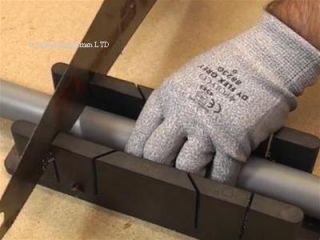
Plastic pipes are best cut with a dedicated tool which is specifically made for cutting plastic pipe.
Now the pipes have been cut you can either fit a T piece and another length of pipe and fix a washing machine tap to this or you can fit a washing machine tap T piece.

CONNECTING THE WASTE PIPE
Now the supply for the appliance has been taken care of, there is now the waste pipe to plumb in.
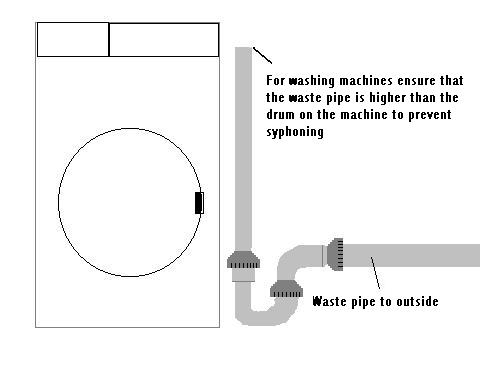
This can vary in difficulty depending on which method you use, typically if the washing machine is close to the sink then a waste pipe trap with spigot trap is ideal. All you have to do is to connect the washing machine waste hose to the spigot which is on the side of the waste trap underneath the sink using a jubilee clip or similar. Ensure that the waste pipe from the appliance is higher than the height of the waste trap otherwise the machine can be emptied by syphonage! It is a good Idea to fix the hose to the kitchen worktop as seen in this diagram by using a screw in hook.

| HOSE
|
SELF CUTTING WASTE
|
WASTE PIPE TRAP WITH SPIGOT
|
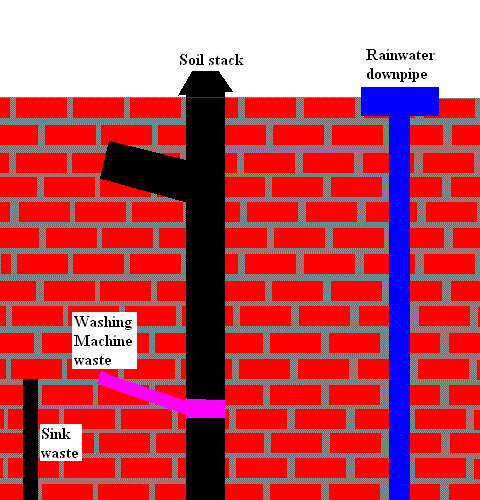
If there is no suitable place to connect the waste pipe from the machine you will have to fit a waste pipe and trap. This pipe must connect to the foul water sewer and not the rain water soakaway. The Foul water sewer can easily be identified as this is where the waste from the toilet goes. You will need to make an hole through the wall which is big enough for the waste pipe to fit through, this pipe is normally 40mm.

Please see the section on Fitting a waste pipe
ultimatehandyman privacy policy
illustration by Mollie Campbell aged 9