www.ultimatehandyman.co.uk

TOILETS

Home | A-Z contents | D.I.Y Forum | Safety First  | Disclaimer


Google
 
Web www.ultimatehandyman.co.uk


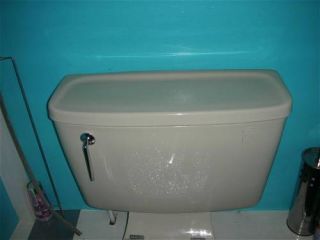
Basically there are two different types of toilet, the close coupled which is popular today and the separate low lever suite.


CLOSE COUPLED             SEPARATE LOW LEVEL

Most toilets flush in the same way- by means of a syphon, some modern toilets are now being made with simple push valves in the bottom of the cistern tank.


TOILET WONT FLUSH

If you find your toilet will not flush, do not panic, simply fill a bucket from the bath taps and swill the contents of the bowl away

Toilets are very reliable but occasionally  they stop working, here are some possible causes-

1. Broken lever arm.

2. The Cistern lever is broken (very un-likely)

Cistern lever with arm attached

3. There is no water in the cistern (easy to check)

4.The syphon diaphragm or connecting rod is broken.

Causes 1 to 3 are easily Fixed and do not warrant further discussion.

To replace the cistern syphon, first isolate the water to the toilet or the main water supply to the house. Bail out the water from the cistern using a small jug or cup and remove water from the bottom of the cistern with a sponge.

Changing the syphon in a toilet that is not close coupled is far easier as you do not need to remove the cistern from the wall!

Instructions for a separate low level-

Undo the lower of the two large nuts beneath the cistern using a large pipe wrench or pair of water pump pliers, now disconnect the flush pipe and push it to one side.

Place a bucket or bowl beneath the cistern and undo the Nut which is immediately below the cistern (syphon replacing nut), some water may be released by the syphon, take note of any washers that are removed as new ones  need fitting  when replacing the siphon.

Unhook the lift rod from the flushing lever and remove the syphon. Refitting is a complete reversal of removal, be sure to fit any washers (preferably new ones) that you have taken out. Ensure everything is tight but do not over tighten before refilling the cistern.

Instructions for a close coupled toilet-

Isolate and drain the cistern as described above.

Disconnect the water inlet pipe and overflow pipe.

Underneath the cistern there are two wing nuts which hold the cistern to the toilet bowl, remove these and then remove any screws that are holding the cistern to the wall.

The cistern will now lift clear of the toilet bowl.

It is advisable to fit a new close coupling kit as well as a new siphon as the old rubber seal will probably be perished.


Unhook the lift rod from the siphon and remove the rubber seal from the bottom of the siphon near the connecting plate. Undo the syphon retaining nut using a large pipe wrench or similar then remove the syphon and replace it using new washers and a new fitting kit. Refitting is the reverse of the removal.

Be sure to wrap some PTFE sealing tape around the threads on the water inlet and overflow pipes before reconnection!


Ball valve float


Ball valve


Newer Type bottom entry Ball valve


TOILET OVERFLOW IS RUNNING

If your toilet or any other overflow is running, there is a problem with either the Ball valve or the ball valve float.

To establish what is causing the problem check the ball valve float first, inspect it for any holes and unscrew it to see if it is holding water, if water is found in the Ball it will need replacing, these cost pence!

If the ball valve float seems OK then the valve itself must be faulty, to test it try pulling the valve upwards a little, if water stops entering from the valve then perhaps it just needs adjusting. Some ball valves have screws on to adjust the water level, others do not. You can always bend the arm on the ball valve a little until water stops rising over the level of the overflow.

Once this has been tried with no success it is obviously the ball valve or the washer inside the valve that is faulty, I do not recommend replacing the washer in ball valves as the valves them selves become worn, so replacement of the washer is false economy as it might only last a few weeks!

Replacement of the ball valve is the best solution, this is relatively easy-

1. Isolate the water supply to the cistern and if necessary Bail out the water from the cistern using a small jug or cup.

2.Using a large spanner or water pump pliers undo the nut holding the water supply pipe to the Ball valve and disconnect.

3. Undo the nuts which are holding the nuts to the cistern and take note of any washers that will need replacing.

4. Refit the new Ball valve and washers and tighten all nuts making sure to fit PTFE tape around the Thread of the ball valve before reconnecting the water inlet pipe to it.


Plumbing Centre