


Earthing and Bonding
Electrical earthing and bonding is a subject of great debate and even the Institute of electrical engineers (IEE) have mentioned this in the 16 edition of the IEE regulations "This is the most debated topic in the IEE regulations. The confusion may have arisen because of a lack of understanding of earthing and bonding".
| Before working on any electrical circuit you must ensure that it is isolated correctly and cannot accidentally be switched back on. Please read the article on safe isolation procedures before doing any electrical work. If you are not 100% certain what you are doing call a qualified electrician. Building regulations are changing all the time and modifying your home electrics could be against new rules and could invalidate your home insurance, if in doubt check first! |
Earthing wire is connected to the metal incoming service pipes and the metal pipes in the bathroom by means of earthing clamps, these must not be used on Lead pipes as they are not suitable. The earthing clamps must conform to BS 951 and must contain a label which states " SAFETY ELECTRICAL CONNECTION- DO NOT REMOVE".
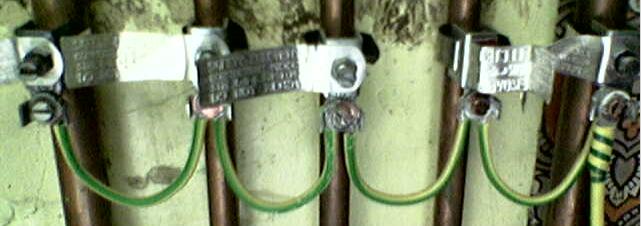
It is advisable to have the Earthing/Bonding in your home checked by a competent electrician, to measure exactly how good the earth is in your home. You no doubt will of seen earthing wires in the home, these are the green and yellow wires that go from the Main earthing terminal to the Incoming metal and Gas supply pipes from your water and gas meters (and Oil pipes if you have them). These are known as the main equipotential bonding conductors, The thickness or cross-sectional area of this wire is normally no less than 10mm2. The green and yellow wires that you may see in your bathroom are supplementary or additional equipotential bonding wires and are normally no less than 4mm2
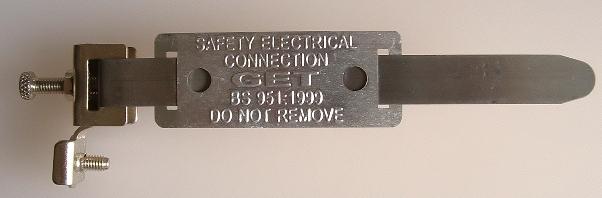
This is a typical clamp that would be used to earth either 10mm2 or 4mm2 wire to Metal pipes, but not Lead! Lead pipes require special clamps and in some cases the wire may need soldering by a competent person. This conforms to BS 951 and carries the label "SAFETY ELECTRICAL CONNECTION- DO NOT REMOVE".
