


Penetrating damp is caused when water enters the property via small cracks or joints in the fabric of the property, if left un treated the damp can cause considerable damage to the property and the occupants.
PENETRATING DAMP
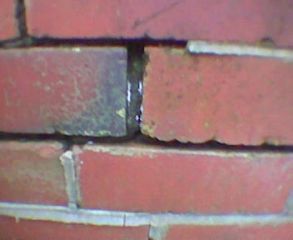
Although you would expect Penetrating damp to be the easiest form of damp to diagnose and eradicate, this is often not the case as identifying the exact point of entry of the water can be extremely difficult. Water can ingress from the outside of the property to the inside from several different faults, it is often weeks or months before the damp problems appear on thee inside of the property. In this picture the mortar (often called pointing) is missing from some of the bricks. This type of fault should be remedied at the earliest opportunity to prevent more damage from occurring, please see the page on repointing
Leaking gutters and downspouts can also cause penetrating damp problems, even more so if the wall for the property is of a solid construction.
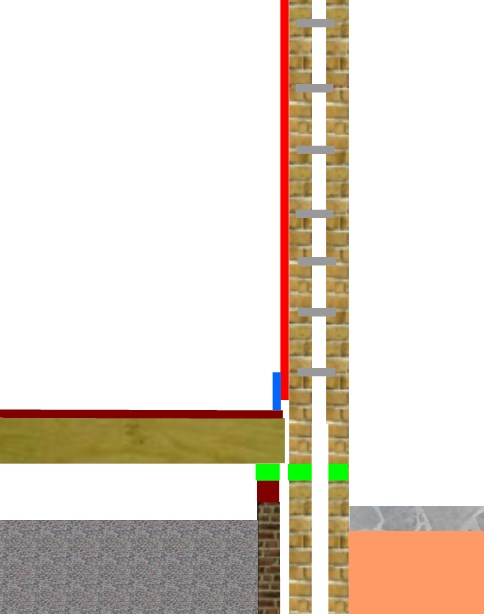
The idea of a cavity wall is to prevent dampness being transferred from the outer skin of the property to the inner skin of the property. Often cavity walls will be fitted with air vents so that any moisture in the cavity can escape to atmosphere. Here in this diagram you can see a typical cavity wall construction. The grey pieces between the inner and outer skin are cavity wall ties these hold the two walls together so that they support each other.
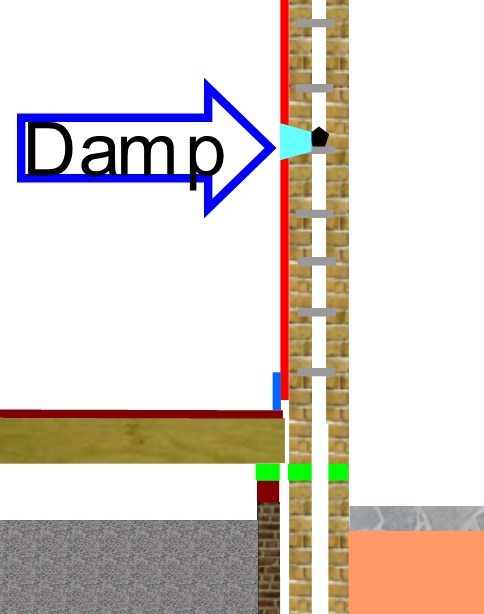 Often damp patches can be seen randomly on external walls, this can be caused by debris in the cavity, perhaps being lodged on one of the wall ties. This debris can cause damp patches in the property in two ways-
The debris is damp and is transferring dampness from the outer skin of the property to the inner skin of the property where the wallpaper or painted wall is discoloured or stained due to the damp.
The debris is creating a cold spot on the inside wall of the property and condensation from within the property is accumulating on the cold spot, which again stains the wallpaper or paint. Before any remedial action is taken it is advisable to check the cavity for debris using a suitable camera.
