


How to use stepladders safely
Accidents at home that involve the use of stepladders are very common and more than 1000 people each month visit hospital because of accidents caused when using step ladders!
There are several different types of step ladder available and it is essential that the correct type is chosen for the job
All stepladders should meet the required British or European standards - check this whenever you buy, hire or borrow one:
• BS 1129:1990 (British) applies to wooden ladders.
• BS 2037:1994 (British) applies to metal ladders.
• BS EN 131:1993 (European) applies to both.
• BS 7377:1994 (British) applies to step stools.
Is It Strong Enough? New stepladders are generally marked according to their safe working load. This classification, however, can vary slightly in the values given, and has caused confusion. The variation is due to the different way in which the values for safe working are expressed. In the British Standard it is "Duty Rating". These have been arrived at by taking into account the general conditions and probable frequency of use for each type. The European Standard uses "Maximum Static Vertical Load". To help clarify this we have used both sets of figures.
British Standard stepladders to BS 2037 (aluminium) or BS 1129 (wood) or BS 7377 (step stools).
• Class 1 (Industrial) Duty Rating 130kg -Maximum vertical static load 175kg
• Class 3 (Domestic) Duty Rating 95kg -Maximum vertical static load 125kg
European standard stepladders to BE/EN 131 (All types)
• (Previous Class 2) Duty Rating 115kg - Maximum vertical static Load 150kg
Are the stepladders safe for use?
To minimise the risk of having an accident using step ladders please check these points-
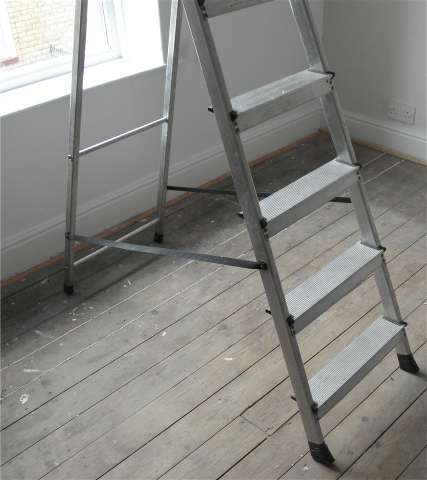
Is the stepladder in good condition?
Check the condition of the stiles, the steps and the top platform to ensure that they are not damaged in any way
Check the condition of the hinge mechanism and ensure that the ladders lock open in the correct position
Ensure the steps are clean and free from contaminants
Check the feet are all present and in good condition Ensure the stepladders are clean and dry Never use a stepladder that you know is faulty or defective
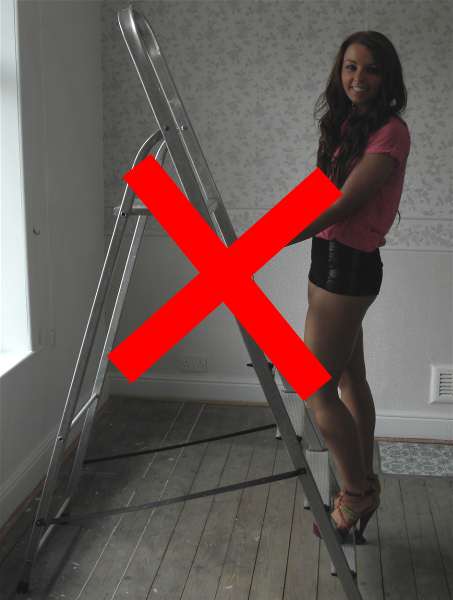
Never attempt to climb a stepladder wearing high heel shoes
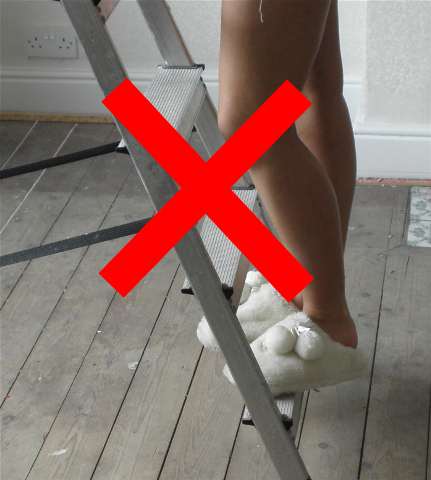
Never attempt to climb a stepladder wearing slippers or barefoot
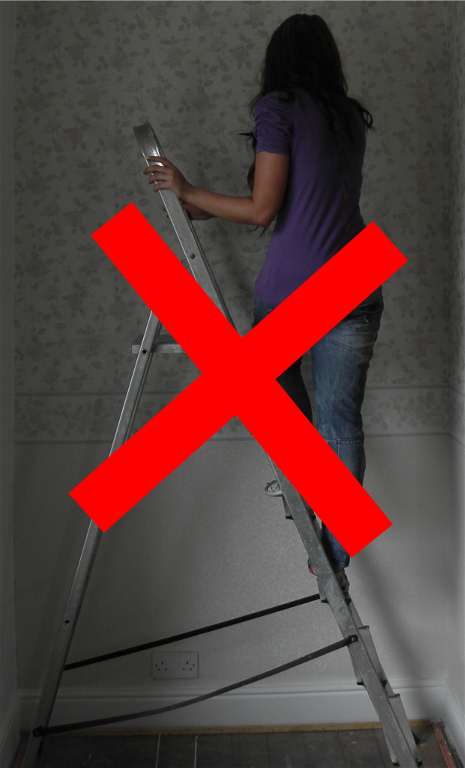
Never use a stepladder sideways on
Do not stand on the top platform and do not over-reach.
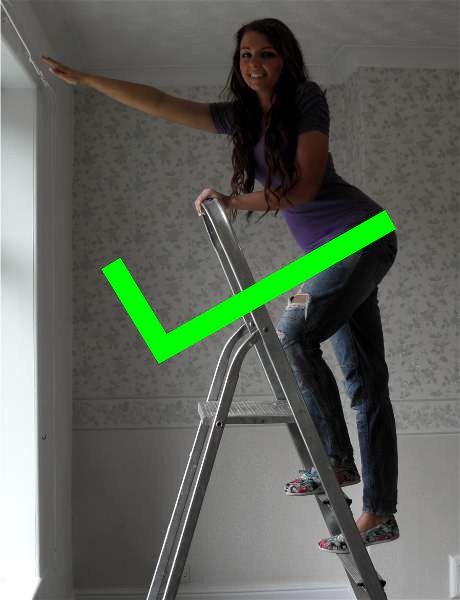
Wear flat firm shoes
Ensure the ladder is locked in the open position
Keep a firm grip of the stepladder
Ensure the ladder is on a firm surface
