

All DIY tasks require the correct tools, below we will take a look at the various tools available for plastering and for plaster boarding. Where possible always buy the best quality tools that you can afford. Cheap tools often make the job more difficult and in some cases impossible!
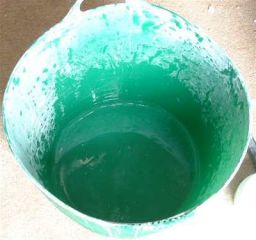
A large flexible mixing bucket is essential for mixing plaster or dry wall adhesive. A bucket like this is easy to clean as you can simply let the plaster set on the sides and then break it off by bending the sides of the bucket.
Clean tools are essential for plastering!
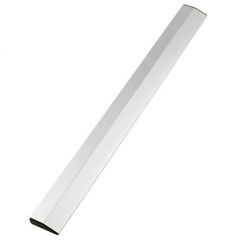
A featheredge is a long sturdy piece of aluminium that is very straight, these are normally about 2 metre's long and are used when using the direct bond method of plaster boarding.
These are excellent for achieving straight plasterboard application and can also be used as a plasterers Darby.
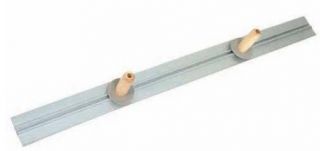
This Plasterers Darby is used to apply a backing coat of plaster such as bonding or browning. Wooden guides are normally fastened to the wall to the correct depth and the Darby is used to flatten the plaster.
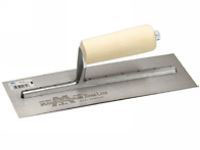
The plasterers trowel will get plenty of use, so ensure that it is kept clean. These trowels soon rust if they are not looked after so a stainless steel trowel is a better choice.
Plasterers trowels are used for applying all types of plaster and Dry wall adhesive.
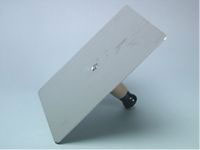
The hawk is used alongside the float. Plaster is normally held on the hawk then transferred to the wall by using the float.
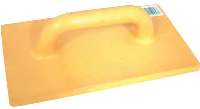
A plasterers float will normally be made from polycarbonate and will normally be used when rendering. Plasterers trowels are often called floats, but to clear this up a plasterers trowel is metal and a plasterers float is polycarbonate or similar material.
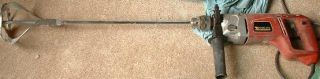
A mixer drill can make mixing plaster far easier, especially if you have lots to do. This is a high powered (1050 watt) drill and a mixer paddle. You can of course use a piece of wood to mix the plaster but this will make it far easier.